


 VeriDoc Ledger
A Powerful Verification Protocol
Our technology merges advanced anti-fraud software with Distributed Ledger Technology (DLT).
This combination ensures secure, transparent, and tamper-proof data validation. It’s a trusted solution designed to eliminate fraud and enhance verification integrity.
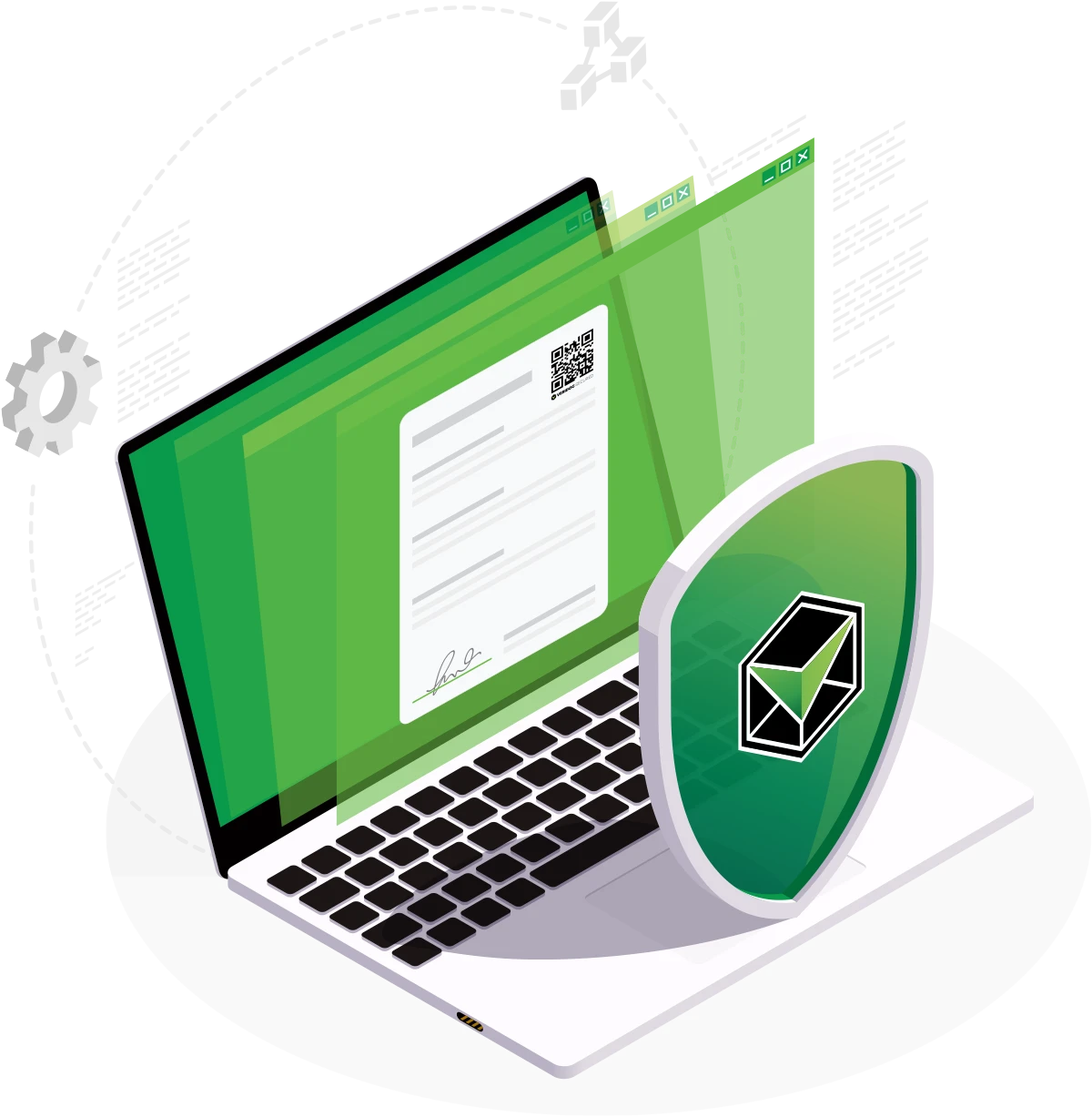
Most Systems Today Are Built
On Centralized Networks.
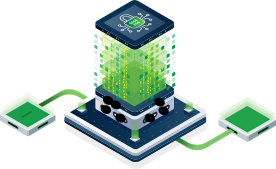
This means that data is stored using a client-server configuration.

Blockchain Technology Uses A Decentralised Network Configuration.
Data is replicated and stored on every machine that acts as a node in the peer-to-peer network.
The larger this network, the harder it is to hack the system. You would need to hack multiple computers at once to be able to alter or change the data, compared to a single server which can be targeted.
Other Characteristics Tied To
Blockchain Technology Include:

Immutable
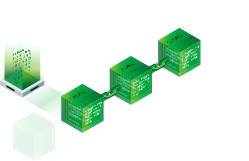
It cannot be altered or deleted, guaranteeing transparency, trust, and security. Each block is permanently linked to the previous one, creating a tamper-proof digital ledger that safeguards all transactions.

Incorruptible
VeriDoc Global’s incorruptible blockchain ensures trust, transparency, and security by preventing fraud and tampering. Every record is permanently stored and verifiable, guaranteeing data integrity and authenticity.

Self-patching
VeriDoc Global’s self-patching blockchain automatically detects and fixes vulnerabilities in real time, ensuring continuous security, reliability, and tamper-proof performance.
Unique Hash Value
VeriDoc Global uses a unique hash value to verify whether a document is true and correct. Hash values can be compared to the DNA or fingerprint of a file, whereby no two hash values are the same.
The original document is processed through a cryptographic algorithm and a hash value is produced which identifies the original document. If the document is modified in any way, the value of the hash will also change significantly.
Using a cryptographic algorithm means that customers are not required to store the original document on the blockchain and their information remains private.
QR Codes
QR codes are a type of matrix barcode or two-dimensional barcode. A standard QR code can hold up to 3Kb of data, compared to a standard barcode which holds less than 100 characters.
VeriDoc Global allows users to verify whether a document is true and correct by simply scanning a QR code on the document. Once the QR code is scanned, VeriDoc compares the unique hash value found in the QR code to the unique hash value of the original document stored on the client’s server and the blockchain.
Since the unique hash value stored in the blockchain is incorruptible and can never be modified, it lends itself as a highly trusted reference point for the verification process.
A Multi-chain Solution
Storage of Documents
All documents are stored on the client’s server. VeriDoc Global uses APIs to generate the unique hash value and to check whether the document on the client’s server has been changed. If the original document on the client’s server is modified in any way, the verification process will fail.
VeriDoc Global has also integrated with cloud-based systems such as Google Drive, giving customers more options for storing their personal information.
The VeriDoc Protocol only requires the unique hash value to verify whether a document is true and correct. Unless requested by the customer, the original document is never placed on the blockchain.

Blockchain Transactions
A growing concern in the blockchain community is the cost of public blockchain transactions. Price volatility with cryptocurrencies such as Ether (ETH) and congestion due to airdrops and project launches have caused gas fees to increase anywhere up to $500 per transaction during peaks.
VeriDoc Ledger solves this issue by moving away from Proof of Work and Proof of Stake. Under a Proof of Authority framework, the cost of transactions is directly correlated to the cost of running blockchain infrastructure. Since server costs are typically fixed in nature, projects can now set budgets around predictable blockchain transaction fees.
Beyond Unique Hash Values, QR Codes and Blockchain
VeriDoc Global is currently working on adding Artificial Intelligence (AI) to its verification solution. This will allow users to view a report of all the changes made to a document. Generating a report on all changes made to a 150-page document will save companies time and money on paralegal services.
VeriDoc Global is also integrating analytics and Big Data solutions to enhance counterfeit detection and fraud. When a unique QR code used to protect a physical product is detected as having been verified in two different locations at the same time, the system will know that one of those products is a counterfeit and that the QR code has been compromised. Using technology to stop that QR code from being verified again will potentially stop thousands of counterfeits from entering the market.